
Analog Load Cell vs Digital Load Cell

When investing in a weighbridge or industrial weighing system, one of the most critical decisions you’ll make is choosing between an analog load cell and a digital load cell.
At first glance, both may seem similar — they measure weight, convert force into electrical signals, and help businesses ensure accurate billing and compliance. But in real-world industrial applications, the difference between analog and digital load cells can directly impact your accuracy, maintenance cost, downtime, and long-term ROI.
So which one should you choose?
Let’s break it down in simple, practical terms.
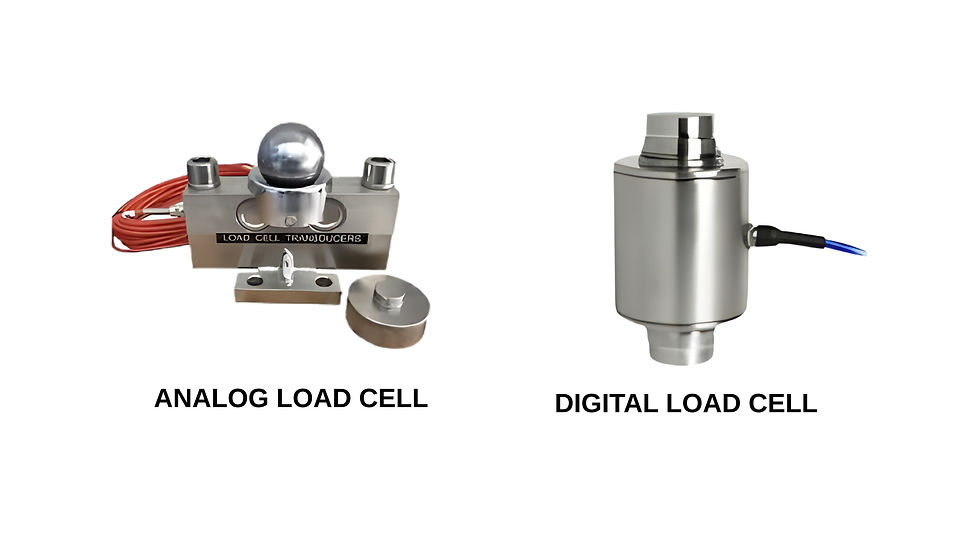
What is an Analog Load Cell?
An analog load cell converts mechanical force into a small electrical signal (millivolts). This signal travels through cables to a junction box and then to a weight indicator, where it is processed and displayed.
Key Features of Analog Load Cells:
Traditional and widely used
Lower initial cost
Simple installation
Compatible with most basic weighbridge systems
Requires calibration via junction box
Where Analog Load Cells Work Best:
Small-scale industries
Budget-sensitive projects
Standard truck weighbridges
Locations with minimal electrical interference
Analog systems have been trusted for decades. However, they are more vulnerable to signal loss, moisture issues in junction boxes, rodent cable damage, and electrical noise.
What is a Digital Load Cell?
A digital load cell converts the analog signal into a digital signal inside the load cell itself. This digital signal is then transmitted directly to the weight indicator.
In simple words: Digital load cells process data internally before sending it out — making them more accurate and reliable.
Key Features of Digital Load Cells:
Higher accuracy and stability
No traditional junction box required
Individual load cell diagnostics
Better resistance to electrical noise
Easy corner calibration via software
Where Digital Load Cells Are Ideal:
High-traffic weighbridges
Mining, cement, steel industries
Automated weighing systems
Smart weighbridge with ERP integration
Locations with lightning or voltage fluctuations
Analog vs Digital Load Cell: Major Differences
Feature | Analog Load Cell | Digital Load Cell |
Signal Type | Millivolt signal | Digital signal |
Accuracy | Good | Very High |
Calibration | Manual (junction box) | Software-based |
Maintenance | Higher | Lower |
Electrical Noise Resistance | Moderate | Excellent |
Cost | Lower upfront | Higher upfront |
Diagnostics | Not available | Individual load cell monitoring |
Which Load Cell is Better for Weighbridge?
The honest answer: It depends on your business requirement.
Choose Analog Load Cell If:
You want lower initial investment
Your weighbridge traffic is moderate
Budget is a key decision factor
You don’t require advanced monitoring
Choose Digital Load Cell If:
You want long-term accuracy and ROI
Your weighbridge handles heavy daily traffic
You need real-time diagnostics
Downtime directly impacts revenue
You want automation or integration with software
For large industries like mining, infrastructure, logistics hubs, and cement plants — digital load cells are becoming the preferred choice
Cost Comparison: Is Digital Worth the Extra Price?
Many buyers ask:“Why digital load cell costs too high?”
Yes, digital load cells cost more initially. But consider this:
Less maintenance
No junction box issues
Faster troubleshooting
Reduced downtime
Higher weighing accuracy
Better fraud prevention
Over 5–7 years, digital systems often reduce operational losses significantly.
In high-revenue weighbridge operations, even a 0.1% weighing error can mean lakhs in annual loss. That’s where digital load cells justify their cost.
Maintenance & Lifespan Comparison
Analog Systems:
Require regular junction box maintenance
More cable-related issues
Vulnerable to moisture
Digital Systems:
Individual fault detection
Less wiring complexity
More stable in harsh environments
If your weighbridge is in a remote area with lightning risk or heavy rainfall, digital load cells offer better protection and reliability.
Future of Load Cell Technology
The weighing industry is moving towards:
Smart weighbridges
Remote monitoring
ERP-integrated systems
Cloud-based data tracking
Digital load cells support these advanced features more efficiently than analog systems.
If you're planning a future-ready weighbridge, digital is the smarter investment.
Final Verdict: Analog vs Digital Load Cell
There is no “one-size-fits-all” answer.
For cost-effective, small to mid-scale operations → Analog load cell is sufficient.
For high-accuracy, high-volume, and automated setups → Digital load cell is the better long-term solution.
Before making a decision, always evaluate:
Traffic volume
Industry type
Budget
Accuracy requirement
Long-term operational goals
Choosing the right load cell is not just about price — it’s about protecting your revenue.
If you are planning to install a new weighbridge or upgrade your existing system, consult an experienced load cell manufacturer to understand which solution fits your business model best.
Because in the weighing industry — accuracy is money.
KANTA KING
Website: https://www.kantaking.com/
Contact Us: +91.9560915555
Email: info@kantaking.com


Comments