
How Corrosion Around Load Cell Mounts Can Affect Weighbridge Performance

A weighbridge is designed to handle heavy vehicle loads and deliver consistent, accurate weight measurements. However, its performance depends on more than the weighing platform and load cells alone. The condition of the load cell mounting assemblies also plays an important role in maintaining weighing accuracy and operational reliability.

One issue that often goes unnoticed is corrosion around weighbridge load cell mounts.
Exposure to moisture, rainwater, chemicals, dust, and harsh industrial environments can gradually affect mounting hardware and surrounding components. If left unaddressed, corrosion may interfere with load transfer, restrict movement, and contribute to weighing inconsistencies.
Understanding how corrosion develops and affects load cell mounts can help weighbridge owners identify potential problems before they lead to costly repairs or operational interruptions.
What Causes Corrosion Around Weighbridge Load Cell Mounts?
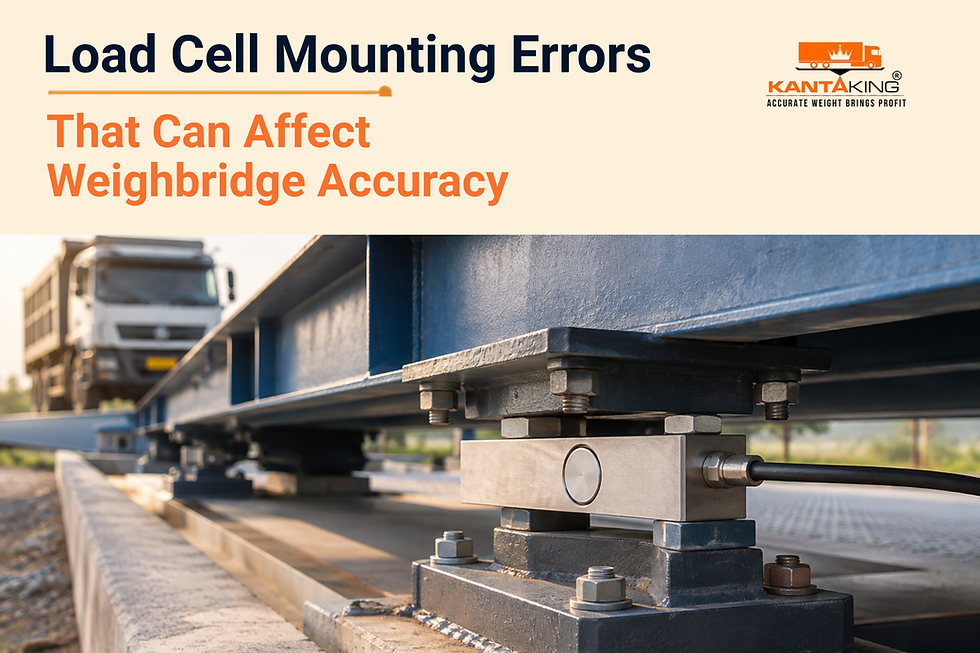
Load cell mounts connect the weighing platform to the load cells and help transfer the applied load correctly. Depending on the weighbridge design, these assemblies may include mounting plates, bolts, washers, restraints, and other metal components.
Corrosion can develop when these components are repeatedly exposed to environmental conditions that encourage metal deterioration.
Common causes include:
Moisture accumulation: Rainwater, washing activities, and poor drainage can allow water to collect around mounting assemblies.
Chemical exposure: Fertilizers, salts, industrial chemicals, and corrosive materials may accelerate deterioration.
Dust and debris buildup: Material trapped around mounting points can retain moisture and make inspection difficult.
Damaged protective coatings: Scratches, worn paint, or damaged surface treatments can expose the underlying metal.
Inadequate drainage: Water that remains around the weighbridge foundation or mounting area increases the risk of corrosion over time.
These conditions are particularly relevant at weighbridge installations in mining, cement, steel, agriculture, and other industrial environments where equipment faces demanding operating conditions.
How Corrosion Around Load Cell Mounts Affects Weighbridge Performance
Corrosion does not always cause an immediate weighing failure. In many cases, the effects develop gradually and become noticeable through changes in performance.
1. Inconsistent Weight Readings
Load cells measure the force applied by a vehicle and convert it into an electrical signal. For accurate results, the load must transfer correctly through the weighing structure.
When corrosion affects mounting surfaces or associated hardware, it can contribute to uneven contact, restricted movement, or changes in the way forces are transferred. Depending on the severity and location of the damage, this may lead to inconsistent readings or reduced weighing repeatability.
However, corrosion alone does not automatically mean that a load cell is faulty. Calibration, installation, mechanical alignment, wiring, and other factors should also be examined during troubleshooting.
2. Restricted Movement in Mounting Assemblies
Some load cell mounting systems are designed to accommodate small movements caused by temperature changes, vehicle loading, and normal structural behaviour.
Corrosion products can accumulate between moving or contacting surfaces. In certain mounting designs, this buildup may restrict intended movement or interfere with the proper functioning of restraints and other mechanical components.
The result can be additional mechanical stress, irregular load transfer, or weighing behaviour that changes under different operating conditions.
3. Increased Stress on Load Cells
A load cell should receive force in the manner specified by its design. Corroded, seized, or damaged mounting hardware can interfere with this arrangement.
For example, a mounting assembly that no longer moves or aligns as intended may introduce unwanted side forces or mechanical binding. These conditions can affect load cell performance and, in severe cases, contribute to premature component damage.
Inspecting the complete mounting assembly is therefore important when investigating unexplained weighing problems.
4. Faster Deterioration of Mounting Hardware
Corrosion can gradually reduce the integrity of metal components. Mounting plates, fasteners, restraints, and supporting hardware may become weakened or difficult to remove during maintenance.
If deterioration continues, repairs may require more than routine cleaning. Severely damaged components may need replacement, and the surrounding foundation or mounting arrangement may also require inspection.
Early identification can help reduce the risk of extensive repair work and avoidable downtime.
5. Unexpected Maintenance and Operational Delays
A weighbridge is often a critical part of vehicle dispatch, goods receipt, and inventory control. When corrosion-related problems affect weighing performance, operators may need to repeat measurements, investigate discrepancies, or temporarily stop operations.
In facilities handling large volumes of incoming and outgoing materials, these interruptions can affect vehicle turnaround times and daily workflow.
Preventing corrosion is therefore not just a component-protection measure. It is also part of maintaining dependable weighbridge operations.
Warning Signs of Corrosion Around Load Cell Mounts
Regular inspection helps identify corrosion before it develops into a more serious problem. Weighbridge operators and maintenance teams should look for the following warning signs:
Rust or visible deterioration on mounting plates, bolts, and other exposed metal surfaces.
Water accumulation around load cell assemblies or the weighbridge foundation.
Damaged protective coatings or peeling paint on mounting hardware.
Unusual mechanical binding or restricted movement in components designed to move.
Repeated weight discrepancies or poor repeatability that cannot be explained by normal operating conditions.
Fasteners that show visible deterioration or become difficult to service.
Visual inspection alone cannot confirm the condition of every component. Internal damage, electrical faults, and load cell problems may require further examination by a qualified technician.
How to Prevent Corrosion Around Load Cell Mounts
Preventing corrosion requires attention to the installation environment, mounting hardware, and ongoing maintenance practices.
1. Maintain effective drainage
Ensure that rainwater and washdown water can drain away from the weighbridge foundation and load cell areas. Investigate recurring water accumulation instead of allowing moisture to remain around the assemblies.
2. Keep mounting areas clean
Remove accumulated dirt, debris, and material buildup using cleaning methods appropriate for the installation. Avoid aggressive cleaning practices that could damage load cells, cables, seals, or protective coatings.
3. Protect exposed metal components
Use suitable corrosion-resistant materials and protective coatings where appropriate for the environment and mounting design. Any coating or treatment must be compatible with the equipment and must not interfere with mechanical movement or load transfer.
4. Inspect mounting assemblies periodically
Include load cell mounts, fasteners, restraints, cables, and surrounding structural components in the preventive maintenance schedule. Inspection frequency should reflect environmental conditions, operating intensity, and manufacturer recommendations.
5. Investigate weighing irregularities promptly
If readings become inconsistent, do not assume that recalibration alone will solve the problem. Check for mechanical binding, corrosion, alignment issues, debris, damaged cables, and other possible causes before deciding on corrective action.
6. Follow manufacturer-approved repair procedures
Corroded mounting hardware should be assessed before cleaning, loosening, or replacement. Work around load cells and supporting structures must follow the manufacturer's instructions and appropriate safety procedures.
Conclusion
Corrosion around load cell mounts is a maintenance concern that can gradually affect weighbridge reliability, mechanical movement, and weighing consistency. Moisture, chemical exposure, poor drainage, and damaged protective coatings can all contribute to the deterioration of mounting assemblies.
The key is to identify the problem early, maintain suitable environmental protection, and inspect the entire mounting arrangement rather than focusing only on the load cells.
For businesses that depend on accurate truck weighing, proper load cell mounting and preventive maintenance help support dependable performance, reduce avoidable downtime, and extend the service life of weighbridge components.
Kanta King understands the importance of reliable weighing systems, from load cells and mounting components to complete truck scale installations. Choosing suitable components and maintaining them correctly can make a meaningful difference to long-term weighbridge performance. KANTA KING
Website: https://www.kantaking.com/
Contact Us: +91.9560915555
Email: info@kantaking.com


Comments