
Load Cell Overloading: How Incorrect Mounting Can Increase the Risk

Load cells are designed to measure weight accurately, but what happens when they start experiencing more force than they are supposed to handle?

Load cell overloading is one of the common reasons behind weighing inaccuracies, equipment damage, and unexpected system failures. While excessive weight is an obvious cause, the problem is not always related to the load being measured. Sometimes, incorrect mounting, improper load distribution, or mechanical stress can put additional pressure on a load cell, even when the actual weight is within its rated capacity.
This makes proper load cell installation just as important as selecting the right load cell for an application.
What Is Load Cell Overloading?
Load cell overloading occurs when a load cell experiences a force beyond its specified load capacity. Every load cell is designed to operate within a particular weight range. When this limit is exceeded, the internal sensing element may experience excessive strain.
However, overloading does not always happen because someone places too much weight on a weighing platform. Uneven loading, side forces, incorrect positioning, and improper mounting arrangements can also create additional stress.
Over time, this can affect measurement accuracy and may even cause permanent damage to the load cell.
How Incorrect Mounting Increases the Risk of Load Cell Overloading
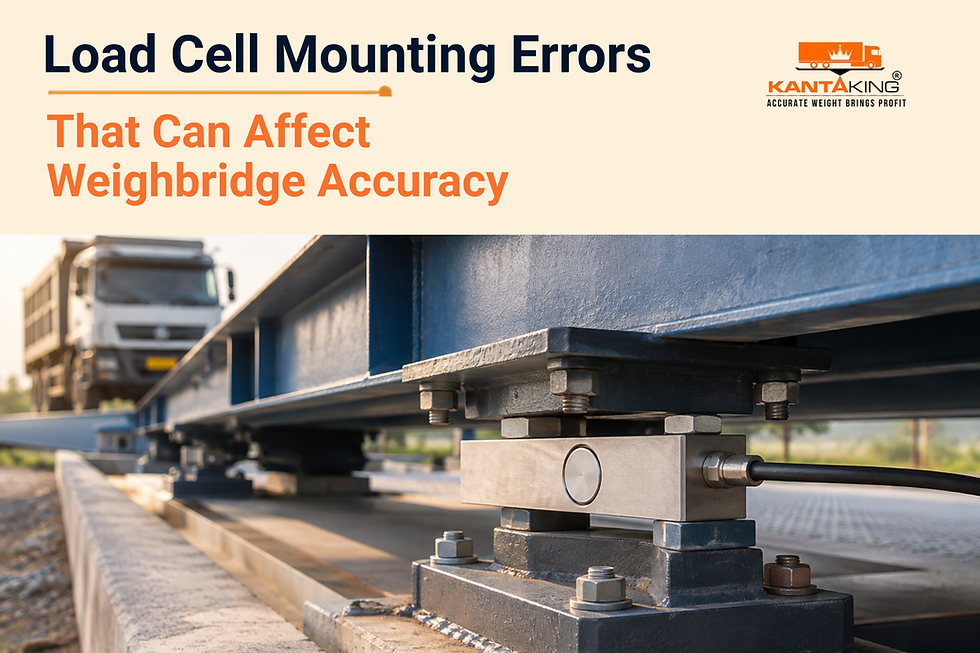
A load cell is designed to measure force in a specific direction. Its mounting arrangement ensures that the applied load is transferred correctly. When the installation is not done properly, the force distribution can change, exposing the load cell to unwanted mechanical stress.
Here are some common mounting mistakes that can increase the risk of overloading.
1. Uneven Load Distribution
In multi-load-cell systems, such as weighbridges, tanks, and industrial platforms, the load needs to be distributed properly across all supporting load cells.
If the mounting positions are incorrect or the platform is not properly aligned, one or more load cells may carry more weight than intended.
For example, if a platform is supported by four load cells but one corner is not properly supported, the remaining load cells may experience uneven force distribution. Even if the total weight is within the system's capacity, individual load cells can become overloaded.
2. Improper Load Cell Alignment
Correct alignment is essential for accurate weighing. Load cells must be installed according to the manufacturer's specified orientation and mounting requirements.
If a load cell is misaligned, the applied force may not act along its intended measurement axis. This can introduce side loads, bending forces, or other unwanted stresses.
Such forces can affect the load cell's performance and increase the possibility of mechanical damage.
3. Incorrect Mounting Assembly
Mounting assemblies play an important role in transferring the load safely to the load cell.
They help maintain proper positioning and manage unwanted forces caused by movement, vibration, or thermal expansion.
Using an unsuitable mounting assembly, incorrect hardware, or improperly tightened mounting bolts can disturb the load transfer mechanism.
As a result, the load cell may experience additional mechanical stress instead of receiving the intended vertical load.
4. Poor Foundation and Installation Surface
A stable foundation is essential for any weighing system. If the supporting structure is uneven, weak, or improperly constructed, it can affect how the load is transferred to the load cells.
Foundation settlement, surface irregularities, and structural misalignment can create uneven pressure points.
This is particularly important in heavy-duty applications such as weighbridges, storage tanks, and industrial hoppers, where even small installation issues can affect long-term performance.
5. Ignoring Side Loads and Mechanical Constraints
Load cells are primarily designed to measure force in a specified direction. However, real-world applications often involve vibration, movement, thermal expansion, and structural changes.
If the mounting arrangement does not accommodate these conditions, unwanted forces may act on the load cell.
For instance, a tank weighing system without suitable provisions for thermal expansion may transfer additional forces to its load cells as the tank structure expands or contracts.
These additional forces can interfere with weighing accuracy and increase mechanical stress.
Warning Signs of Load Cell Overloading
Identifying the problem early can help prevent costly equipment damage. Some common warning signs include:
Inconsistent weight readings: The weighing system displays fluctuating or unexpected values.
Zero shift: The load cell does not return to its original zero reading after unloading.
Reduced accuracy: Measurements become unreliable even under normal operating conditions.
Mechanical deformation: Visible damage or deformation may appear in the load cell or its mounting components.
Frequent calibration issues: The system repeatedly requires adjustments to maintain accurate readings.
These symptoms do not always indicate overloading, but they should be investigated before the problem becomes more serious.
How to Prevent Load Cell Overloading Through Proper Mounting
Preventing load cell overloading starts with correct selection, installation, and maintenance practices.
Choose the right load cell capacity: Consider the maximum expected load, dead load, and operating conditions before selecting a load cell.
Ensure proper alignment: Install load cells according to the manufacturer's mounting instructions.
Use suitable mounting assemblies: Select mounting hardware designed for the application and load cell type.
Maintain an even load distribution: Ensure that the supporting structure distributes weight correctly across all load cells.
Check the foundation: Verify that the mounting surface is stable, level, and capable of supporting the intended load.
Inspect regularly: Check mounting hardware, load cell positioning, and structural conditions for signs of wear or damage.
Conclusion
Load cell overloading is not always caused by excessive weight. Sometimes, the real problem lies beneath the weighing platform, where incorrect mounting, poor alignment, or uneven load distribution creates additional mechanical stress.
A properly selected load cell can still deliver unreliable results if its mounting arrangement is not suitable for the application.
Paying attention to installation details, using appropriate mounting assemblies, and ensuring correct load distribution can help protect load cells, improve weighing accuracy, and extend the life of the entire weighing system.
Remember, accurate weighing starts not just with the right load cell, but also with the right mounting.
KANTA KING
Website: https://www.kantaking.com/
Contact Us: +91.9560915555
Email: info@kantaking.com


Comments